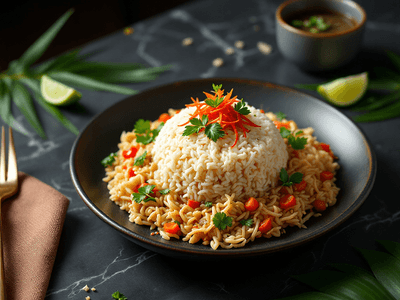
Nasi Basmathi
Makan Tengah Hari • Malaysia
How to Make Nasi Basati (Traditional & Healthy Version)
Nasi Basati is a delightful Malaysian rice dish that showcases the multicultural culinary heritage of Malaysia. Known for its fragrant aroma and vibrant flavors, Nasi Basati is typically prepared with long-grain rice, fresh local herbs such as pandan leaves and lemongrass, and a touch of santan (coconut milk) for creaminess. This vegetarian version highlights the use of wholesome, plant-based ingredients, making it suitable for those seeking a nourishing and balanced meal. The origins of Nasi Basati are rooted in Malaysia’s diverse food culture, where rice is a staple in everyday meals. The dish is often served for lunch, accompanied by a variety of vegetable sides and sambal for an added kick. Its subtle, aromatic flavors are enhanced by the infusion of pandan and lemongrass, making it a comforting and satisfying choice. The simplicity and versatility of Nasi Basati make it a beloved option for both family meals and festive gatherings, truly reflecting the rich tapestry of Malaysian cuisine.
Bahan-bahan(untuk 1 heaping bowl (approx. 200g cooked rice))
- 1 cup Beras basmati (basmati rice) (rinsed and drained)
- 1 1/2 cups Air (water) (for cooking rice)
- 1/4 cup Santan (light coconut milk) (use fresh or boxed)
- 2 leaves Daun pandan (pandan leaves) (tied in a knot)
- 1 stalk Serai (lemongrass) (bruised)
- 2 leaves Daun limau purut (kaffir lime leaf) (torn into pieces) - pilihan
- 1/2 tsp Garam (salt)
- 1 tsp Minyak kelapa (coconut oil) (or vegetable oil)
- 1 small Bawang merah (shallot) (sliced thinly) - pilihan
- 1/2 inch Halia (ginger) (sliced) - pilihan
Arahan
- 1
Rinse the beras basmati thoroughly until water runs clear, then drain well.
2 minutes
Rinsing removes excess starch for fluffy rice.
- 2
Heat coconut oil in a medium pot over medium flame. Add sliced shallot and ginger; sauté until fragrant.
3 minutes
Do not let the shallots brown; just lightly sweat them.
- 3
Add the rinsed rice, stir gently to coat each grain in oil and aromatics.
2 minutes
Stirring the rice in oil helps with separation after cooking.
- 4
Pour in water and santan. Add pandan leaves, lemongrass, kaffir lime leaf (if using), and salt. Stir to combine.
2 minutes
Tie the pandan leaves into a knot for easy removal later.
Kenapa hidangan ini sihat
This vegetarian Malaysian Nasi Basati is a wholesome lunch option, being naturally low in fat and free of cholesterol. Using light santan and minimal minyak kelapa keeps calories in check, while the inclusion of fresh herbs adds flavor without excess sodium. The recipe is free from artificial additives, making it a clean, nutritious meal ideal for calorie-conscious eaters.
Nasi Basati is a health-conscious choice, featuring low-fat coconut milk and a balance of complex carbohydrates from basmati rice. Basmati rice provides slow-releasing energy, while pandan and lemongrass add antioxidants and essential oils. Lemongrass and ginger support digestion and have anti-inflammatory properties. With minimal oil and no added sugars, this dish is suitable for most diets, offering vitamins B and C, potassium, and beneficial plant compounds.
Petua
- 💡Tip 1: For extra fragrance, add a few drops of pandan extract if fresh leaves are unavailable.
- 💡Tip 2: Let the rice rest after cooking to prevent clumping and enhance flavors.
- 💡Tip 3: Serve with a fresh ulam platter or acar for extra nutrients and taste.
Penyimpanan & hidangan
Store cooled Nasi Basati in an airtight container in the refrigerator for up to 2 days. Reheat gently in a steamer or microwave with a splash of water to restore moisture.
Paling sesuai dihidang: Breakfast or Lunch
Fakta Nutrisi
| Nutrien | Per 100g |
|---|---|
| Tenaga | 250.0 kcal |